New Zealand National Cricket Team vs Sri Lanka National Cricket Team Match Scorecard
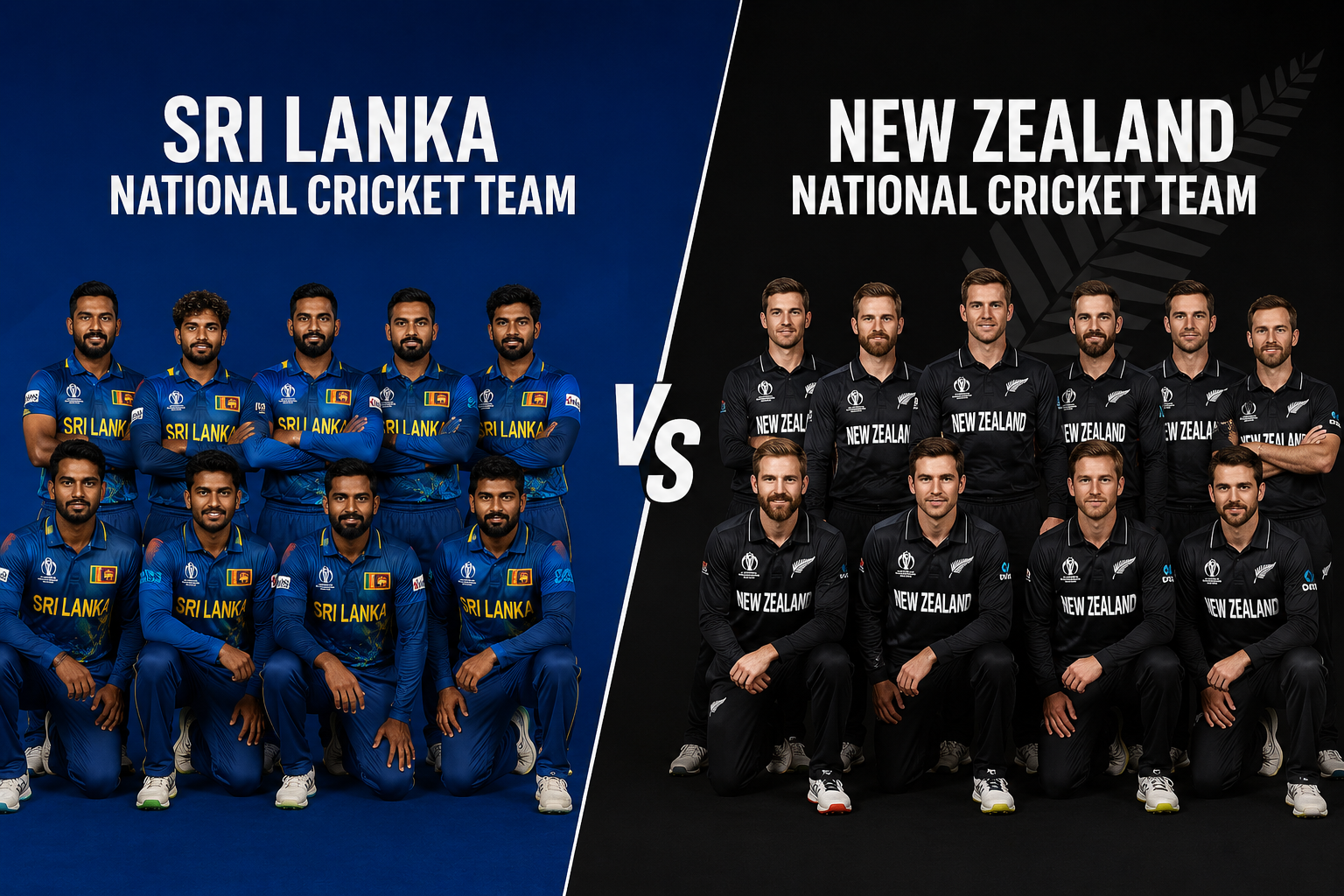
Table of Contents
The rivalry between these two international cricket sides has grown steadily through years of competitive encounters across formats. From early meetings defined by cautious batting and disciplined bowling to modern clashes filled with aggressive stroke play and tactical innovation, every match has added a new chapter to their evolving story. Conditions, player form, and strategic decisions have often played decisive roles in shaping outcomes. Fans have witnessed thrilling finishes, dominant spells, and unforgettable individual performances that reflect the changing nature of world cricket. This overview captures their journey through scorecards, key moments, and performances that have defined their competitive relationship over time.
Match Result and Player of the Match Table
| Match Date | Format | Venue | Batting First | Winner | Margin | Player of Match |
| Feb 25, 2026 | T20I | Colombo (RPS) | New Zealand | New Zealand | 61 runs | R. Ravindra |
| Jan 11, 2025 | ODI | Eden Park | Sri Lanka | Sri Lanka | 140 runs | A. Fernando |
| Jan 08, 2025 | ODI | Seddon Park | New Zealand | New Zealand | 113 runs | R. Ravindra |
| Jan 05, 2025 | ODI | Basin Reserve | Sri Lanka | New Zealand | 9 wickets | M. Henry |
| Jan 02, 2025 | T20I | Nelson | Sri Lanka | Sri Lanka | 7 runs | K. Perera |
| Dec 30, 2024 | T20I | Mt Maunganui | New Zealand | New Zealand | 45 runs | M. Hay |
Recent Matches Table
| Match Date | Stadium | Format | NZ Score | SL Score | Match Status | Winner Team |
| Feb 25, 2026 | Colombo (RPS) | T20I | 168/7 | 107/8 | Completed | New Zealand |
| Jan 11, 2025 | Eden Park | ODI | 150 | 290/8 | Completed | Sri Lanka |
| Jan 08, 2025 | Seddon Park | ODI | 255/9 | 142 | Completed | New Zealand |
| Jan 05, 2025 | Basin Reserve | ODI | 180/1 | 178 | Completed | New Zealand |
| Jan 02, 2025 | Nelson | T20I | 211/7 | 218/5 | Completed | Sri Lanka |
| Dec 30, 2024 | Mt Maunganui | T20I | 186/5 | 141 | Completed | New Zealand |
Match Overview Table
| Match Date | Series/Tour | Innings 1 | Innings 2 | Toss Winner | Toss Choice | Match Referee |
| Feb 25, 2026 | T20 World Cup | New Zealand | Sri Lanka | Sri Lanka | Bowl First | J. Srinath |
| Jan 11, 2025 | Bilateral Series | Sri Lanka | New Zealand | Sri Lanka | Bat First | R. Madugalle |
| Jan 08, 2025 | Bilateral Series | New Zealand | Sri Lanka | Sri Lanka | Bowl First | R. Madugalle |
| Jan 05, 2025 | Bilateral Series | Sri Lanka | New Zealand | New Zealand | Bowl First | R. Madugalle |
| Jan 02, 2025 | Bilateral Series | Sri Lanka | New Zealand | New Zealand | Bowl First | J. Crowe |
| Dec 30, 2024 | Bilateral Series | New Zealand | Sri Lanka | Sri Lanka | Bowl First | J. Crowe |
Best Bowling Figures Table
| Bowler Name | Team | Overs | Maidens | Runs | Wickets | Match Format |
| Rangana Herath | Sri Lanka | 3.3 | 2 | 3 | 5 | T20I |
| Sir Richard Hadlee | New Zealand | 10.1 | 4 | 25 | 5 | ODI |
| S. H. U. Karnain | Sri Lanka | 8.0 | 1 | 26 | 5 | ODI |
| M. Muralidaran | Sri Lanka | 7.5 | 0 | 30 | 5 | ODI |
| Henry Shipley | New Zealand | 7.0 | 0 | 31 | 5 | ODI |
| Rachin Ravindra | New Zealand | 4.0 | 0 | 27 | 4 | T20I |
Statistical Comparison Table
| Team Name | Highest Total | Lowest Total | Top Run Scorer | Most Wickets | Most Catches | Best Win Rate |
| New Zealand | 211/7 | 60 | Kane Williamson | Tim Southee | Ross Taylor | 58.4% |
| Sri Lanka | 218/5 | 92 | Kusal Perera | W. Hasaranga | C. Asalanka | 41.6% |
| NZ-Women | 150/6 | 101 | Suzie Bates | Amelia Kerr | Sophie Devine | 65.0% |
| SL-Women | 153/5 | 98 | C. Athapaththu | S. Kumari | N. de Silva | 35.0% |
| New Zealand A | 158/3 | 129 | Simon Keene | Tim Pringle | Cole McConchie | 33.3% |
| Sri Lanka A | 368/9 | 110 | Wanuja Sahan | Wanuja Sahan | K. Dilhari | 66.7% |
Early Encounters That Shaped the Rivalry Foundation
The early meetings between these two international sides set the tone for a competitive but respectful cricket relationship. In the initial phase, one team relied heavily on structured fast bowling attacks, while the other leaned on natural stroke play and spin variations. These matches were not just about results but about understanding conditions, adapting to overseas pitches, and building confidence in unfamiliar environments. Early score patterns often showed low to moderate totals, reflecting cautious batting approaches and disciplined bowling spells. As both sides gained exposure to each other’s strengths, matches gradually became more competitive. Fielding intensity also improved, with sharp catches and direct hits becoming common turning points. The foundation of this rivalry was built on learning curves, where every encounter added tactical depth and psychological awareness.
| Aspect | Team A Style | Team B Style | Match Effect |
| Bowling Approach | Pace focused | Spin dominant | Balanced contests |
| Batting Style | Defensive start | Aggressive strokes | Mixed totals |
| Fielding Standard | Structured units | Agile movement | Key run saving |
| Match Tempo | Controlled pace | Variable rhythm | Unpredictable outcomes |
Contrasting Cricket Cultures and Tactical Identity
The clash between these two sides has always been defined by contrasting cricket philosophies. One side traditionally emphasizes pace, bounce, and seam movement, building pressure through disciplined lines and lengths. The other side thrives on creativity, wrist work, and spin control, often dictating the middle overs with clever variations. This cultural difference creates fascinating tactical battles where momentum shifts frequently. Coaches and captains play a crucial role in adapting strategies depending on pitch behavior and match situation. While one team prefers structured game plans, the other often relies on instinctive decision-making and adaptability. These differences not only shape match outcomes but also influence squad selection and long-term planning. Over time, both teams have borrowed elements from each other, making modern contests more balanced and unpredictable.
| Aspect | Team A Identity | Team B Identity | Tactical Impact |
| Bowling Strength | Fast attack | Spin variety | Mid-innings control |
| Batting Approach | Technique driven | Flair based | Momentum swings |
| Strategy Style | Structured plans | Flexible tactics | Dynamic matches |
| Decision Making | Data oriented | Intuitive calls | Unpredictable phases |
First Defining Clash That Shifted Momentum
A turning point in this competitive journey came when one side delivered a complete performance under pressure in a high-stakes encounter. The batting unit anchored the innings with patience, building partnerships instead of chasing quick runs. The bowling attack responded with relentless accuracy, restricting scoring opportunities and forcing errors. Field placements played a decisive role, cutting off boundaries and building scoreboard pressure. This match is often remembered for its shifting momentum, where early dominance by one side was countered by a strong comeback in the middle overs. The final stages saw calm execution under pressure, highlighting mental strength and tactical clarity. From this point onward, both teams began treating each meeting with increased seriousness, leading to more strategic preparation and squad specialization.
| Aspect | Batting Contribution | Bowling Contribution | Result Influence |
| Top Order | Stable foundation | Early wickets | Controlled start |
| Middle Order | Recovery phase | Pressure buildup | Momentum shift |
| Death Overs | Acceleration | Tight lines | Final control |
| Field Strategy | Defensive setup | Aggressive traps | Match turning point |
Spin vs Pace Battles That Decided Crucial Moments
One of the most defining features of this rivalry has been the battle between spin and pace. In certain conditions, fast bowlers extracted movement and bounce, especially in early overs, creating immediate pressure on batters. On the other hand, spin attacks dominated middle overs, slowing scoring rates and forcing risky shots. This constant shift in dominance made matches unpredictable and strategically rich. Captains often rotated bowlers based on pitch behavior rather than fixed plans, leading to innovative field settings. Batters had to constantly adjust footwork and shot selection depending on who was bowling. Many matches were decided in these transitional phases where one team managed to break partnerships or accelerate scoring. The effectiveness of each bowling style often depended on venue conditions, making adaptability the key factor in success.
| Aspect | Pace Bowling Impact | Spin Bowling Impact | Match Phase |
| Powerplay | Early breakthroughs | Limited use | Start control |
| Middle Overs | Pressure buildup | Wicket taking | Key dominance |
| Death Overs | Yorkers & bouncers | Variations | Final push |
| Adaptability | Condition based | Strategy based | Overall outcome |
High Pressure ODI and T20 Encounters That Intensified Rivalry
Limited overs matches between these sides brought out some of the most intense cricket moments. Chasing targets under lights, defending low totals, and last-over finishes became recurring themes. Batters often played high-risk innings, especially during powerplays, while bowlers focused on containment and wicket bursts. The shorter format increased pressure on execution, where even small mistakes had big consequences. Several matches went down to the final overs, keeping fans on edge until the last ball. Fielding also played a critical role, with run-outs and boundary saves frequently shifting momentum. These encounters highlighted the importance of finishing ability, death-over bowling skills, and tactical flexibility under pressure situations.
| Aspect | ODI Performance | T20 Performance | Key Difference |
| Batting Tempo | Balanced | Aggressive | Scoring speed |
| Bowling Plan | Structured spells | Match-up based | Flexibility |
| Pressure Handling | Moderate | High intensity | Execution level |
| Match Outcome | Stable finishes | Close finishes | Unpredictability |
Captaincy Decisions and Tactical Masterstrokes
Leadership has played a crucial role in shaping outcomes between these teams. Captains often had to make quick decisions based on pitch behavior, opposition form, and match situation. Bowling changes at the right moment have broken partnerships, while field adjustments have saved crucial runs. Some matches have been defined by bold decisions such as promoting pinch hitters or introducing unexpected bowling spells. Tactical awareness in reading opposition weaknesses has often separated winning and losing sides. Captains who remained calm under pressure generally guided their teams to stronger finishes. This leadership battle added another layer of depth to the rivalry, making each encounter a strategic contest rather than just a physical one.
| Aspect | Captain Strategy | Execution Result | Match Impact |
| Bowling Changes | Timely rotation | Wicket impact | Momentum shift |
| Field Placement | Aggressive setups | Run control | Pressure build |
| Batting Order | Flexible moves | Scoring boost | Stability gain |
| Decision Timing | Reactive calls | Match control | Final outcome |
Modern Era Clashes and Current Competitive Standing
In recent years, the rivalry has become more balanced due to improved depth in both squads. Younger players have brought fresh energy, while experienced players continue to provide stability. Modern cricket strategies such as analytics-driven decisions, match-up bowling, and power-hitting have significantly influenced outcomes. Both teams now enter matches with detailed preparation and data-backed game plans. Fitness levels and fielding standards have also improved, making contests faster and more competitive. Matches in the modern era often feature high scoring games, quick wickets, and momentum swings within a few overs. This evolution has ensured that every meeting remains unpredictable and engaging for fans worldwide.
| Aspect | Modern Strength NZ | Modern Strength SL | Impact Factor |
| Batting Depth | Strong middle order | Explosive top order | Balanced scoring |
| Bowling Attack | Pace dominance | Spin variety | Strategic control |
| Fielding Level | High efficiency | Improved agility | Run savings |
| Match Style | Data driven | Aggressive approach | Close finishes |
Conclusion
This cricket rivalry stands as a testament to how two contrasting playing styles can produce consistently compelling contests. Over time, both teams have evolved, adapting their strategies to counter each other’s strengths while developing new match-winners. Whether in Tests, ODIs, or T20 formats, the encounters have delivered moments of brilliance, pressure-filled situations, and shifting momentum that kept fans engaged. Scorecards only tell part of the story, while the real essence lies in tactical battles and emotional intensity on the field. As both sides continue to grow, this rivalry promises even more unpredictable and exciting chapters in the future of international cricket.
Frequently Asked Questions
1. What makes this rivalry competitive?
The contrast in playing styles, with one side relying on pace and structure while the other uses spin and creativity, makes matches highly competitive and unpredictable.
2. Which format has produced the most exciting matches?
Limited-overs formats, especially ODIs and T20s, have produced the most thrilling finishes due to fast scoring and high-pressure chases.
3. How do pitch conditions affect matches between these teams?
Pitches play a major role, with fast tracks favoring pace attacks and slower surfaces enhancing spin dominance, often changing match outcomes.
4. Who are the key players in this rivalry?
Both teams have produced impactful batters, strike bowlers, and all-rounders who regularly influence scorecards and match momentum.
5. Why are scorecards important in understanding this rivalry?
Scorecards help break down performances, partnerships, and bowling spells, but they do not fully capture the emotional and tactical depth of the matches.




Post Comment