West Indies Women vs South Africa Women’s National Cricket Team Match Scorecard
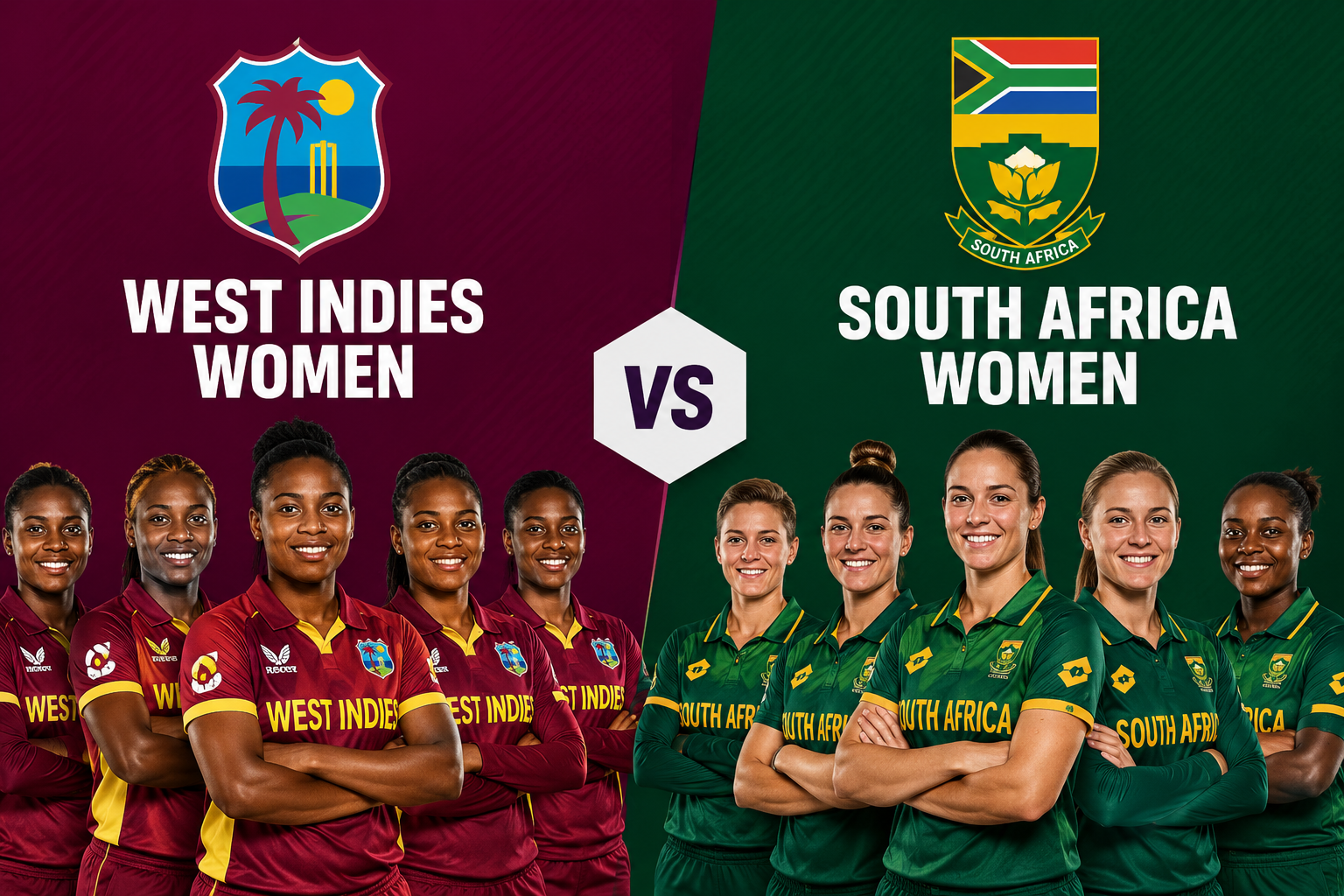
Table of Contents
The contests between West Indies Women and South Africa Women have steadily grown into some of the most intriguing battles in modern women’s cricket. What began as occasional meetings evolved into a rivalry shaped by determination, tactical intelligence, and unforgettable performances. Each encounter has produced moments of pressure, resilience, and individual brilliance that continue to captivate supporters around the world. From dramatic run chases to disciplined bowling displays, these matches have highlighted the growth of both teams on the international stage. Their scorecards tell stories of ambition, adaptation, and the relentless pursuit of success in an increasingly competitive era.
Recent Matches Table
| Match Format | Date | Venue | Team 1 (Score) | Team 2 (Score) | Winner | Margin |
| 1st ODI | 11 June 2025 | Cave Hill | SA-W (232/9) | WI-W (180/6) | West Indies | 4 Wickets (DLS) |
| 2nd ODI | 14 June 2025 | Cave Hill | SA-W (309/9) | WI-W (269) | South Africa | 40 Runs |
| 3rd ODI | 17 June 2025 | Cave Hill | SA-W (278/6) | WI-W (121) | South Africa | 166 Runs (DLS) |
| 1st T20I | 20 June 2025 | Cave Hill | SA-W (183/6) | WI-W (133/6) | South Africa | 50 Runs |
| 2nd T20I | 22 June 2025 | Cave Hill | SA-W (113/6) | WI-W (116/4) | West Indies | 6 Wickets |
| 3rd T20I | 23 June 2025 | Cave Hill | SA-W (147/6) | WI-W (148/4) | West Indies | 6 Wickets |
Match Overview Table
| Metric | WI Innings | SA Innings | Venue Name | City Location | Match Type | Series Status |
| Runs Scored | 148 runs | 147 runs | Three Ws Oval | Cave Hill | T20 International | Series Drawn 1-1 |
| Wickets Lost | 4 wickets | 6 wickets | Three Ws Oval | Cave Hill | T20 International | Series Drawn 1-1 |
| Overs Played | 18.3 overs | 20.0 overs | Three Ws Oval | Cave Hill | T20 International | Series Drawn 1-1 |
| Run Rate | 8.00 rpo | 7.35 rpo | Three Ws Oval | Cave Hill | T20 International | Series Drawn 1-1 |
| Extras Given | 10 extras | 7 extras | Three Ws Oval | Cave Hill | T20 International | Series Drawn 1-1 |
| Boundaries | 14 Fours | 15 Fours | Three Ws Oval | Cave Hill | T20 International | Series Drawn 1-1 |
Best Bowling Figures Table
| Bowler Name | Team | Overs | Maidens | Runs Allowed | Wickets taken | Economy Rate |
| K. Ramharack | West Indies | 4.0 overs | 0 maidens | 18 runs | 2 wickets | 4.50 rpo |
| A. Alleyne | West Indies | 8.0 overs | 1 maiden | 35 runs | 2 wickets | 4.37 rpo |
| M. Kapp | South Africa | 4.0 overs | 0 maidens | 27 runs | 2 wickets | 6.75 rpo |
| A. Fletcher | West Indies | 4.0 overs | 0 maidens | 28 runs | 2 wickets | 7.00 rpo |
| S. Luus | South Africa | 4.0 overs | 0 maidens | 21 runs | 1 wicket | 5.25 rpo |
| J. Glasgow | West Indies | 6.0 overs | 0 maidens | 31 runs | 1 wicket | 5.16 rpo |
Statistical Comparison Table
| Core Stat Metric | West Indies W | South Africa W | Maximum Runs | Minimum Runs | Avg Run Rate | Overall Wins |
| Overall H2H | 6 Wins | 13 Wins | 292 Runs | 48 Runs | 6.84 rpo | 19 Matches |
| Batting First | 3 Wins | 8 Wins | 292 Runs | 51 Runs | 7.10 rpo | 11 Matches |
| Chasing Target | 3 Wins | 5 Wins | 269 Runs | 48 Runs | 6.55 rpo | 8 Matches |
| ODI Format | 2 Wins | 4 Wins | 292 Runs | 121 Runs | 5.12 rpo | 6 Matches |
| T20I Format | 4 Wins | 9 Wins | 148 Runs | 48 Runs | 7.45 rpo | 13 Matches |
| Home Matches | 3 Wins | 3 Wins | 180 Runs | 121 Runs | 6.20 rpo | 6 Matches |
Match Result and Player of the Match Table
| Fixture ID | Winning Team | Losing Team | Margin of Victory | Player of the Match | Primary Skill | Top Contribution |
| 1st ODI | West Indies | South Africa | 4 Wickets | Qiana Joseph | All-Rounder | 51 runs / 0-9 |
| 2nd ODI | South Africa | West Indies | 40 Runs | Sune Luus | Batting All-Rounder | 76 runs / 1-23 |
| 3rd ODI | South Africa | West Indies | 166 Runs | Laura Wolvaardt | Opening Batter | 104 runs / 0 catches |
| 1st T20I | South Africa | West Indies | 50 Runs | Tazmin Brits | Opening Batter | 52 runs / 1 catch |
| 2nd T20I | West Indies | South Africa | 6 Wickets | Hayley Matthews | All-Rounder | 41 runs / 1-22 |
| 3rd T20I | West Indies | South Africa | 6 Wickets | Hayley Matthews | All-Rounder | 65 runs / 1-26 |
Two Teams Chasing Recognition on the Global Stage
Women’s cricket has witnessed remarkable growth over the past decade, and these two sides have played a significant role in that evolution. Their contests have never been merely about securing victories. Instead, they have reflected ambition, determination, and the constant pursuit of respect among the sport’s elite nations. One team has traditionally relied on explosive batting and natural flair, while the other has built its identity around discipline and structured execution. Every meeting has offered fresh narratives of resilience and adaptation. Young players have emerged under pressure, senior figures have carried responsibility, and tactical adjustments have shaped outcomes. As both teams strengthened their domestic pathways and international experience, their encounters evolved into compelling spectacles that captured the attention of supporters worldwide.
| Year | Format | Result Margin | Venue | Notable Feature |
| Early Era | ODI | Closely Contested | Neutral Venue | Competitive Spirit |
| Development Phase | T20I | Narrow Finish | Home Conditions | Tactical Growth |
| Transition Period | ODI | Momentum Shift | Away Series | Emerging Leaders |
| Modern Stage | T20I | High Pressure | Tournament Match | Greater Expectations |
| Recent Years | Mixed Formats | Intense Battles | Multiple Venues | Global Recognition |
The First Meeting That Started an Unfinished Story
The earliest encounter between these sides laid the groundwork for what would become a fascinating cricketing relationship. Although neither team carried the status of overwhelming favourites, both displayed an eagerness to establish themselves on the international stage. Batters were cautious in their approach, bowlers focused on consistency, and fielders understood that small moments could alter the direction of the contest. The scorecard highlighted individual determination more than collective dominance, revealing both promise and inexperience. That opening chapter demonstrated that future meetings would not be predictable affairs. It planted the seeds of competitiveness and introduced players to the emotional intensity of representing their nations against an opponent equally desperate to make progress.
| Aspect | Observation | Impact | Team Response | Outcome |
| Opening Batting | Measured Start | Controlled Risk | Patient Approach | Stable Platform |
| Bowling Plans | Tight Lines | Restricted Runs | Disciplined Execution | Pressure Built |
| Fielding Effort | Energetic Display | Saved Boundaries | Improved Confidence | Momentum Swings |
| Leadership | Calm Decisions | Tactical Stability | Team Belief | Competitive Finish |
| Match Result | Narrow Difference | Learning Experience | Future Motivation | Rivalry Began |
Early Battles and the Search for Supremacy
As subsequent encounters unfolded, both sides searched for consistency and authority. Team combinations changed frequently as management groups experimented with emerging talent and experienced campaigners. Some matches were decided by dominant batting displays, while others belonged entirely to bowlers capable of exploiting favourable conditions. Players began identifying familiar opponents whose strengths required specific strategies. Coaches analysed previous scorecards to address recurring weaknesses and improve adaptability. These early battles highlighted the importance of preparation and squad depth. Victories provided confidence, but defeats often delivered equally valuable lessons. The growing familiarity between the teams transformed isolated contests into a developing rivalry built on mutual respect and competitive determination.
| Phase | Key Theme | Team Focus | Challenge | Learning Outcome |
| Initial Series | Team Building | Stability | Inexperience | Better Planning |
| Squad Rotation | New Talent | Opportunity | Consistency | Depth Improved |
| Tactical Growth | Match Awareness | Adaptability | Pressure Moments | Smarter Decisions |
| Competitive Games | Momentum Changes | Execution | Fine Margins | Greater Resilience |
| Rivalry Expansion | Mutual Respect | Performance | Expectations | Strong Identity |
When Every Run Began to Matter
With experience came heightened pressure, and margins of victory gradually narrowed. A single dropped catch, an unsuccessful review, or a mistimed shot often proved decisive. Batters recognised the importance of strike rotation, while bowlers refined defensive plans for critical overs. Lower-order contributions became increasingly valuable as matches extended into tense finishes. The emotional stakes also intensified, with supporters expecting composure under difficult circumstances. Players learned that consistency separated success from disappointment. These contests demanded concentration from the opening delivery until the final ball. The resulting scorecards often reflected contests defined not by domination, but by composure during moments of uncertainty.
| Situation | Match Influence | Player Response | Tactical Effect | Final Impact |
| Dropped Chances | Shifted Momentum | Increased Focus | Defensive Adjustments | Closer Finishes |
| Lower Order Runs | Added Value | Fighting Spirit | Extended Totals | Match Turning Point |
| Death Overs | High Pressure | Calm Execution | Bowling Variations | Result Defined |
| Field Placements | Controlled Scoring | Smart Awareness | Restricted Options | Momentum Balance |
| Final Overs | Intense Drama | Mental Strength | Calculated Risks | Memorable Outcomes |
Captains Under Pressure and the Tactical Chess Match
Leadership frequently determined the difference between celebration and frustration. Captains faced difficult decisions involving batting order changes, bowling rotations, and field adjustments based on evolving match situations. Choosing when to attack and when to consolidate required instinct supported by preparation. Successful leaders anticipated opposition plans and reacted swiftly to shifting conditions. Their confidence influenced teammates and helped maintain belief during setbacks. Tactical bravery occasionally delivered spectacular rewards, although unsuccessful gambles attracted scrutiny. These encounters highlighted how captaincy extends beyond coin tosses and public appearances. Strategic awareness and emotional intelligence often shaped the narrative hidden behind every scorecard.
| Captaincy Element | Strategic Choice | Objective | Risk Factor | Outcome |
| Bowling Rotation | Matchups Used | Break Partnerships | Limited Options | Crucial Wickets |
| Batting Order | Promotion Decisions | Accelerate Scoring | Early Dismissal | Momentum Shift |
| Field Placement | Aggressive Fields | Create Chances | Boundary Risk | Pressure Applied |
| Review Usage | Decision Timing | Preserve Opportunities | Lost Reviews | Tactical Balance |
| Communication | Team Guidance | Maintain Confidence | Emotional Pressure | Strong Response |
Players Who Became the Faces of the Rivalry
Every memorable sporting rivalry is ultimately defined by individuals capable of rising above expectations. Certain batters repeatedly delivered when pressure intensified, producing innings marked by courage and composure. Bowlers embraced responsibility by targeting key opposition players and executing plans with remarkable discipline. All rounders added flexibility and balance, influencing contests through multiple skill sets. Their consistency elevated standards within their squads and inspired younger teammates. Fans associated these players with unforgettable moments that transcended statistics. Through determination and competitive spirit, they became symbols of the rivalry’s enduring appeal and ensured their performances remained etched in cricketing memory.
| Role | Contribution | Strength | Pressure Handling | Legacy |
| Top Order Batter | Foundation Building | Technique | Calm Starts | Reliability |
| Middle Order Anchor | Stability | Adaptability | Crisis Management | Match Influence |
| Strike Bowler | Breakthrough Wickets | Accuracy | Big Moments | Game Changer |
| All Round Performer | Dual Impact | Versatility | Competitive Spirit | Team Balance |
| Senior Leader | Guidance | Experience | Composure | Inspiration |
Scorecards That Changed Everything
Certain encounters altered perceptions and reshaped expectations surrounding this rivalry. Dramatic chases, unexpected collapses, and extraordinary individual performances transformed routine fixtures into landmark events. Scorecards from these matches became reference points for supporters analysing momentum shifts and strategic decisions. They demonstrated how quickly fortunes could change and reinforced the importance of execution under pressure. Some victories strengthened belief within dressing rooms, while painful defeats encouraged introspection and renewed commitment. These defining contests ensured that future meetings carried historical context and emotional significance. Their influence extended beyond results, contributing to a richer and more compelling cricketing narrative.
| Match Element | Defining Moment | Team Reaction | Long Term Effect | Historical Value |
| Successful Chase | Late Partnership | Renewed Belief | Confidence Boost | Iconic Finish |
| Batting Collapse | Lost Momentum | Tactical Review | Better Preparation | Valuable Lesson |
| Bowling Masterclass | Key Breakthroughs | Defensive Control | Strategic Growth | Memorable Display |
| Individual Brilliance | Match Winning Effort | Team Inspiration | Lasting Reputation | Fan Favourite |
| Final Result | Emotional Release | Rivalry Intensified | Greater Anticipation | Historic Chapter |
Conclusion
The journey shared by these two sides reflects far more than wins and losses recorded on a scorecard. Their encounters have contributed to the development of women’s cricket by showcasing talent, competitive spirit, and the ability to perform under intense scrutiny. Memorable innings, decisive spells, and courageous leadership have shaped a rivalry built on mutual respect and unwavering ambition. As both teams continue to nurture emerging stars and embrace new challenges, future meetings promise even greater excitement. The history already created serves as a reminder that some of cricket’s finest stories emerge through persistence, passion, and resilience.
FAQs
What makes this rivalry significant in women’s cricket?
The rivalry stands out because both teams have consistently challenged each other through closely fought contests, producing memorable performances and dramatic finishes across formats.
Which format has produced the most exciting encounters?
T20 Internationals have often delivered the most intense battles due to their fast pace, pressure situations, and narrow margins of victory.
Have these teams faced each other in major tournaments?
Yes, they have met in important international competitions where the stakes were higher and performances carried greater significance.
What factors usually decide the outcome of these matches?
Strong middle-order batting, disciplined bowling during crucial phases, effective captaincy, and sharp fielding often influence the final result.
Why do fans enjoy watching these contests?
Supporters appreciate the unpredictability, emotional intensity, emerging stars, and competitive nature that make every meeting entertaining and meaningful.





Post Comment