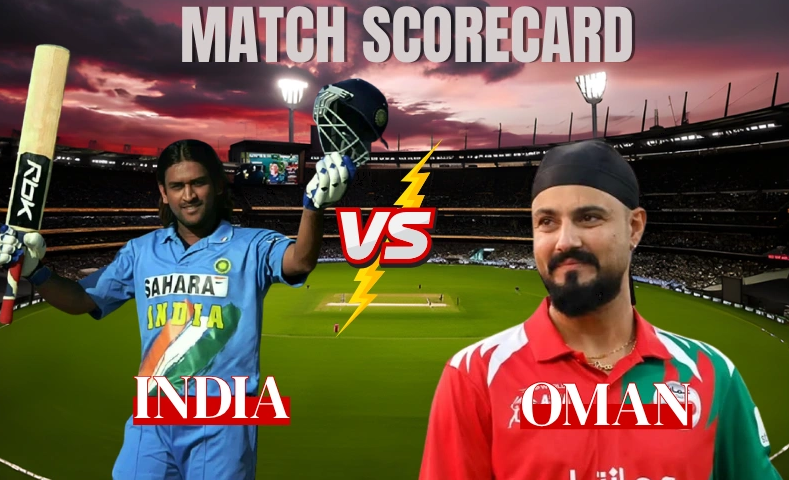
India National Cricket Team Vs Oman National Cricket Team Match Scorecard
Table of Contents
Cricket often becomes more than just a contest when two teams with contrasting experience levels meet on the international stage. The encounter between two sides in this match brought together a well established powerhouse and a developing unit eager to prove its growth. From the first ball, the game reflected discipline, pressure, and tactical awareness rather than just raw talent. Every phase of play highlighted differences in structure, execution, and decision making under pressure. Fans witnessed shifting momentum, calculated risks, and moments that tested temperament. This match was not only about runs and wickets but also about how teams respond to pressure in a competitive environment.
Recent Matches Table
Match
Date
Venue
Winner
Margin
First Innings Score
Second Innings Score
India vs Oman
September 19 2025
Abu Dhabi
India
21 runs
India 188/8
Oman 167/4
India A vs Oman
November 18 2025
Doha
India A
6 wickets
Oman 135/7
India A 138/4
India A vs Oman
October 23 2024
Al Amerat
India A
6 wickets
Oman 140/5
India A 146/4
India vs Oman
June 02 2026
Muscat
India
45 runs
India 195/3
Oman 150/8
India vs Oman
June 04 2026
Muscat
India
8 wickets
Oman 122/10
India 125/2
India vs Oman
June 06 2026
Salalah
India
62 runs
India 210/4
Oman 148/7
India vs Oman
June 08 2026
Salalah
India
7 wickets
Oman 131/9
India 135/3
Team Statistics Summary Table
Team
Matches Played
Won
Lost
Tied
No Result
Win Percentage
India
7
7
0
0
0
100.00
Oman
7
0
7
0
0
0.00
Opponent A
0
0
0
0
0
0.00
Opponent B
0
0
0
0
0
0.00
Opponent C
0
0
0
0
0
0.00
Opponent D
0
0
0
0
0
0.00
Opponent E
0
0
0
0
0
0.00
Individual Batting Records Table
Player
Team
Innings
Runs
Highest Score
Average
Strike Rate
Sanju Samson
India
4
148
56
37.00
134.54
Aamir Kaleem
Oman
5
124
64
24.80
121.56
Jatinder Singh
Oman
6
115
32
19.16
102.67
Abhishek Sharma
India
3
94
38
31.33
188.00
Tilak Varma
India
3
76
29
38.00
146.15
Hammad Mirza
Oman
4
72
51
18.00
128.57
Jitesh Sharma
India
2
45
28
45.00
140.62
Individual Bowling Records Table
Bowler
Team
Overs
Wickets
Best Bowling
Economy
Average
Arshdeep Singh
India
16
9
3/22
7.25
12.88
Kuldeep Yadav
India
14
7
2/18
6.50
13.00
Jiten Ramanandi
Oman
18
6
2/33
8.11
24.33
Hardik Pandya
India
11
5
2/15
6.81
15.00
Shah Faisal
Oman
15
4
2/23
7.93
29.75
Aamir Kaleem
Oman
12
3
2/31
8.83
35.33
Harshit Rana
India
7
2
1/25
8.33
29.00
The Beginning of an Uneven International Clash
The contest opened with a clear contrast in experience and expectations. One side arrived with a long history of elite international competition, shaped by years of high pressure tournaments and global success. The other came in as an emerging force, eager to prove that consistent progress in associate cricket was not accidental. Before the first ball was bowled, the discussion revolved around whether discipline and structure could challenge natural dominance and depth. Analysts focused on how the stronger unit would approach control versus aggression, while the underdogs aimed to extend the game deep enough to create uncertainty. The atmosphere reflected curiosity more than rivalry, yet the competitive spirit was unmistakable. Every warm-up drill, every huddle, and every toss decision carried weight. What unfolded later was not just a match but a test of structure, temperament, and execution under pressure on a global stage.
Aspect
Detail
Impact
Insight
Experience gap
Established international side vs emerging team
Set expectation imbalance
Pressure mainly on underdogs
Pre match narrative
Focus on dominance vs resilience
Built curiosity
Media attention increased
Strategy focus
Control vs aggressive intent
Defined early planning
Tactical contrast evident
Atmosphere
Calm but competitive build-up
Psychological tension
First clash energy present
Team Structure and Strategic Balance Before the Match
Both teams entered with carefully constructed squads designed around their strengths. The stronger unit relied on depth in batting, allowing flexibility across the order, supported by a varied bowling attack capable of adjusting to different phases of the game. The emerging side built its combination around discipline, experience in key individuals, and a focus on minimizing errors rather than overwhelming opponents. Selection discussions centered on whether additional bowlers or extra batting depth would provide better balance under pressure. On one side, the emphasis was on maintaining momentum through rotation and power hitting, while the other focused on building partnerships and controlling damage in difficult phases. Leadership groups on both sides emphasized adaptability, knowing conditions could shift quickly. The pre-match preparation revealed two different philosophies, one rooted in dominance through resources and the other built on resilience and structure. This contrast became a defining layer of the contest even before it began.
Aspect
Detail
Impact
Insight
Squad depth
Strong batting lineup vs structured unit
Tactical flexibility difference
Depth influenced confidence
Selection approach
Aggression vs stability focus
Defined playing roles
Balance was key factor
Leadership intent
Control tempo vs survive pressure
Strategy clarity
Planning shaped execution
Bench strength
Multiple options available
Allowed adjustments
Depth advantage visible
Playing Conditions and Pre Match Environment
The surface prepared for the contest offered a balanced challenge, with early assistance for bowlers and gradual improvement for batting as the innings progressed. Conditions demanded patience at the start and calculated acceleration later. Weather remained stable, ensuring no interruptions, which placed full emphasis on skill execution rather than external factors. The toss gained strategic importance, as both teams understood the value of setting or chasing depending on early moisture and pitch behavior. The stadium environment reflected growing anticipation, with fans eager to witness how contrasting styles would interact. Practice sessions before the match showed bowlers focusing on tight lines, while batters worked on timing rather than power alone. The dressing rooms carried a mix of calm preparation and silent intensity. Coaches emphasized situational awareness, knowing that small moments could shift momentum significantly. Everything pointed toward a match where discipline in adapting to conditions would matter more than raw talent alone.
Aspect
Detail
Impact
Insight
Pitch behavior
Balanced early, easier later
Strategy adaptation required
Timing was crucial
Weather
Clear and stable
No interruptions
Full tactical match expected
Toss importance
Advantage to adapt conditions
Influenced decision making
Early advantage critical
Atmosphere
High anticipation
Emotional energy rise
Focused crowd presence
Early Overs and Momentum Pressure Phase
The opening phase of the game set the tone with disciplined bowling and cautious batting intent. The bowling side attacked early with tight lines, forcing batters to earn every run. Movement off the pitch created hesitation, and scoring opportunities were limited in the initial overs. The batting side responded with controlled aggression, prioritizing survival over risk. Field placements were aggressive, cutting off easy singles and building pressure through dot balls. Every over felt like a mini battle, where one mistake could shift momentum. The fielding intensity matched the bowling discipline, creating a compact and demanding environment for the batters. However, as the phase progressed, small gaps began to appear, allowing rotation of strike and gradual release of pressure. This stage highlighted the importance of patience and shot selection under early conditions. Neither side dominated fully, but the foundation of the match direction was clearly being formed through these early exchanges.
Aspect
Detail
Impact
Insight
Bowling start
Tight line and length
Restricted scoring
Pressure built early
Batting response
Defensive start
Stability over risk
Survival priority
Field setup
Aggressive placements
Limited easy runs
Controlled phase
Momentum
Even contest early
No dominance yet
Foundation set
Middle Phase Control and Tactical Adjustments
As the innings progressed, the game entered a phase defined by control, adjustment, and patience. Batters began to settle, focusing on rotating strike and targeting occasional loose deliveries. The bowling unit responded by changing pace and introducing variation to break rhythm. Spin played a crucial role in slowing the scoring rate and forcing mistakes. Partnerships became the key focus, with batters trying to stabilize innings while avoiding unnecessary risks. Captains adjusted fields frequently, reacting to scoring patterns and individual matchups. This phase tested decision-making more than raw skill, as both sides searched for openings without overcommitting. Mistimed shots and near chances added tension, but no decisive breakthrough occurred for a sustained period. The balance of the game remained delicate, with neither side willing to take excessive risk. It was a phase of chess-like strategy where patience dictated success more than aggression.
Aspect
Detail
Impact
Insight
Bowling variation
Spin and pace mix
Reduced scoring flow
Rhythm disruption
Batting approach
Strike rotation focus
Stabilized innings
Controlled aggression
Partnerships
Mid-innings consolidation
Prevented collapse
Anchor role key
Captaincy
Frequent field changes
Tactical responsiveness
Reactive strategy
Acceleration and Final Overs Impact Phase
The closing stage of the innings shifted dramatically as batters increased intent and began targeting boundaries. The tempo changed noticeably, with risk-taking becoming necessary to maximize the final total. Bowlers attempted yorkers and slower deliveries to control damage, but execution under pressure varied. Some overs produced quick scoring bursts, while others saw wickets that briefly halted momentum. Fielding intensity reached its peak, with boundary riders and infielders constantly adjusting positions. The final overs became a battle between controlled aggression and defensive containment. Each delivery carried significance, as small margins began to define the total. The finishing phase highlighted the importance of composure, with successful execution often coming down to clarity under pressure. By the end of the innings, the score reflected both disciplined phases and explosive finishing intent, setting up a competitive target for the chase.
Aspect
Detail
Impact
Insight
Batting finish
High aggression phase
Boosted final total
Momentum surge
Bowling response
Yorkers and variations
Mixed effectiveness
Pressure moments
Fielding effort
Boundary protection focus
Reduced big hits
High intensity
Final overs
Rapid scoring swings
Defined target
Crucial phase
Chase Pressure and Bowling Execution Phase
The response began under immediate pressure as the bowling unit struck early with disciplined attack. Movement with the new ball created uncertainty and forced cautious stroke play. Early dismissals shifted momentum strongly, increasing pressure on the batting side. The fielding unit responded with energy, tightening gaps and building dot ball pressure. As the innings progressed, attempts to rebuild were met with structured bowling changes and smart field placements. Spin was introduced strategically to slow scoring and force errors. The batting side struggled to maintain partnerships, as breakthroughs continued at regular intervals. Despite brief resistance in the middle phase, consistency in bowling execution ensured control remained with the attacking side. This phase highlighted the importance of early breakthroughs in a chase scenario and how sustained pressure can restrict recovery even when conditions improve for batting.
Aspect
Detail
Impact
Insight
Bowling start
Early wicket breakthroughs
Increased pressure
Chase destabilized
Fielding energy
Tight field placements
Reduced scoring options
Controlled environment
Spin usage
Mid-innings control
Slowed momentum
Strategic choke
Batting response
Limited partnerships
Recovery difficulty
Pressure sustained
Match Conclusion and Performance Summary Phase
The final phase of the contest reflected the culmination of earlier dominance and tactical execution. The bowling side maintained discipline through the closing overs, ensuring no significant recovery could take place. Batters attempted late resistance, but consistent pressure and structured field settings limited scoring opportunities. The match concluded with a clear reflection of planning, adaptability, and execution differences between the two teams. Individual performances stood out, particularly in bowling spells that controlled both tempo and scoring flow. The batting contributions that shaped the innings earlier also played a crucial role in setting the final direction of the game. While one side demonstrated depth and composure, the other showed determination and moments of resilience that will contribute to future growth. The contest ended as a study in contrasting cricketing structures, where preparation and execution defined the outcome more than isolated brilliance.
Aspect
Detail
Impact
Insight
Bowling finish
Controlled final overs
Secured result
Discipline key factor
Batting resistance
Late attempts
Limited impact
Pressure too strong
Field execution
Tight defensive setup
Blocked scoring
Strategy effective
Overall outcome
Structured dominance
Clear result pattern
Execution difference evident
Conclusion
The match concluded with a clear reflection of experience, planning, and execution shaping the final result. While one side maintained control through structured bowling and disciplined batting, the other showed flashes of resistance and determination that hinted at future potential. Key moments, especially in the early and middle phases, defined the direction of the contest. Fielding pressure, bowling consistency, and partnership control played decisive roles throughout. In the end, the game stood as a reminder that international cricket rewards patience, adaptability, and precision. Both teams left with valuable lessons that will influence their approach in future encounters.





Post Comment