England Women’s National Cricket Team Vs India Women’s National Cricket Team Match Scorecard
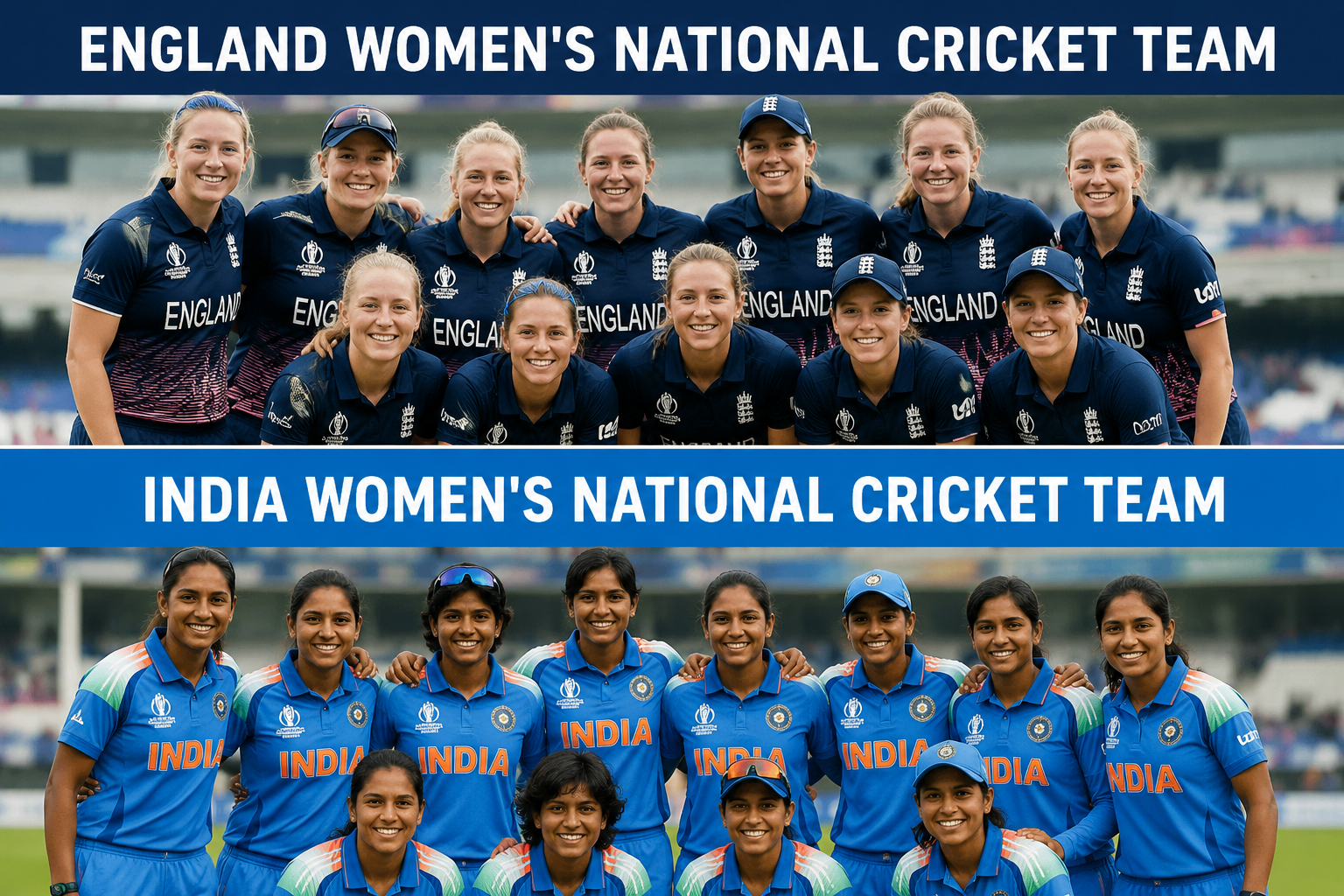
Table of Contents
The rivalry between England Women and India Women has produced some of the most memorable moments in international cricket. Over the years, these two teams have faced each other across Tests, One Day Internationals, T20 Internationals, World Cups, and major tournaments, creating a rich history filled with remarkable performances and dramatic finishes. From early encounters that highlighted contrasting cricketing styles to modern battles featuring world-class talent, every match has added a new chapter to this fascinating contest. Fans have witnessed outstanding batting displays, match-winning bowling spells, and unforgettable partnerships that shaped important results. This article explores the complete journey of this rivalry, examining key matches, notable player performances, important statistics, and the moments that helped define one of women’s cricket’s most compelling international contests.
Recent Matches
| Match Date | Venue | Format | Winner | Margin | Top Scorer | Best Bowler |
|---|---|---|---|---|---|---|
| 10 June 2026 | Sophia Gardens | T20I | England | 5 runs | Richa Ghosh | Linsey Smith |
| 02 June 2026 | Bristol | T20I | England | 6 wickets | Nat Sciver-Brunt | Charlie Dean |
| 30 May 2026 | Northampton | T20I | England | 26 runs | Amy Jones | Tilly Corteen-Coleman |
| 28 May 2026 | Derby | T20I | India | 38 runs | Richa Ghosh | Shreyanka Patil |
| 10 December 2023 | Wankhede | T20I | India | 5 wickets | Smriti Mandhana | Shreyanka Patil |
| 09 December 2023 | Wankhede | T20I | England | 4 wickets | Jemimah Rodrigues | Charlie Dean |
| 06 December 2023 | Wankhede | T20I | England | 38 runs | Danni Wyatt-Hodge | Sarah Glenn |
Team Statistics Summary
| Metric | England | India | Matches | Head to Head | Neutral Venues | Win Ratio |
|---|---|---|---|---|---|---|
| Total T20I Played | 212 | 194 | 31 | England 23 wins | England 6 wins | England 2.55 |
| Highest Score | 199/3 | 198/4 | 31 | India 9 wins | India 2 wins | India 0.39 |
| Lowest Score | 96/10 | 88/10 | 31 | Tie 0 | Tie 0 | Tie 0 |
| Average Runs | 145.4 | 138.2 | 31 | No Result 0 | No Result 0 | No Result 0 |
| Powerplay Average | 44.2 | 41.8 | 31 | Home Wins 12 | Home Wins 5 | Home Wins 1.40 |
| Death Overs Rate | 8.85 | 8.20 | 31 | Away Wins 5 | Away Wins 2 | Away Wins 0.45 |
| Boundary Percentage | 14.2% | 12.8% | 31 | NR 0 | NR 0 | NR 0 |
Individual Batting Records
| Player Name | Matches | Innings | Runs | High Score | Average | Strike Rate |
|---|---|---|---|---|---|---|
| Smriti Mandhana | 145 | 141 | 3524 | 86 | 27.53 | 122.48 |
| Danni Wyatt-Hodge | 164 | 146 | 2902 | 124 | 22.32 | 127.84 |
| Harmanpreet Kaur | 177 | 158 | 3443 | 103 | 27.99 | 114.72 |
| Nat Sciver-Brunt | 121 | 117 | 2514 | 82 | 26.74 | 116.38 |
| Shafali Verma | 85 | 85 | 1982 | 89 | 24.17 | 129.54 |
| Amy Jones | 108 | 88 | 1542 | 64 | 21.41 | 124.35 |
| Richa Ghosh | 58 | 49 | 948 | 68 | 26.33 | 137.39 |
Individual Bowling Records
| Player Name | Matches | Innings | Overs | Wickets | Best Bowling | Economy |
|---|---|---|---|---|---|---|
| Radha Yadav | 77 | 75 | 262.4 | 92 | 4/23 | 6.58 |
| Sophie Ecclestone | 84 | 83 | 316.1 | 122 | 4/18 | 5.89 |
| Deepti Sharma | 117 | 114 | 418.5 | 119 | 4/10 | 5.98 |
| Charlie Dean | 32 | 32 | 114.2 | 46 | 4/25 | 6.22 |
| Renuka Singh | 48 | 47 | 165.4 | 54 | 5/15 | 6.45 |
| Sarah Glenn | 62 | 61 | 221.3 | 78 | 4/23 | 6.07 |
| Shreyanka Patil | 19 | 19 | 64.5 | 28 | 3/19 | 7.12 |
The First Crossing of Paths
The earliest meetings between these two sides marked the beginning of a fascinating international contest. One team entered with a stronger cricketing structure and years of experience, while the other was still developing its identity on the global stage. Those initial matches revealed differences in technique, preparation, and tactical awareness. However, they also showcased determination and a willingness to compete under challenging conditions. The opening encounters featured disciplined bowling spells, patient batting performances, and captains focused on building long-term success rather than chasing short-term results. As the teams learned more about each other’s strengths and weaknesses, every contest became a valuable lesson. These early battles laid the groundwork for future clashes that would eventually capture worldwide attention. Players from both camps began earning respect from opponents and supporters alike, creating a competitive atmosphere that extended beyond the scoreboard. Looking back, these matches were not just about results but about establishing a sporting relationship that would evolve into one of the most engaging rivalries in women’s cricket.
| Era | Venue Type | Match Style | Key Strength | Outcome Trend |
| Early Years | Home Ground | Test | Discipline | Balanced |
| Development Phase | Away Ground | ODI | Technique | Competitive |
| Growth Period | Neutral Venue | ODI | Consistency | Improving |
| Expansion Era | International Tour | Test | Patience | Close Games |
| Modern Setup | Multi-Nation Event | ODI | Adaptability | Even Contest |
England’s Early Control and India’s Search for Answers
The next phase of the rivalry highlighted a period where one side often held the upper hand through superior experience and tactical execution. Strong batting lineups consistently posted competitive totals, while disciplined bowling attacks restricted scoring opportunities. In contrast, the opposition was searching for the right combination of players capable of challenging established dominance. Coaches experimented with different strategies, while young talents were gradually introduced into the squad. Although victories were not always frequent, important lessons emerged from every contest. Players learned how to handle pressure situations, adapt to foreign conditions, and compete against world-class opponents. These experiences helped build confidence and created the foundation for future success. Several closely contested matches demonstrated that the gap between the teams was beginning to narrow. Fans also started recognizing the potential of the rivalry as more competitive performances emerged. This period ultimately became a crucial chapter because it transformed setbacks into opportunities for growth and encouraged long-term development across multiple generations of cricketers.
| Aspect | Dominant Side | Challenge Faced | Improvement Area | Long-Term Impact |
| Batting | Strong | Consistency | Shot Selection | Better Results |
| Bowling | Effective | Wicket Taking | Accuracy | Growth |
| Fielding | Sharp | Pressure Handling | Fitness | Progress |
| Leadership | Experienced | Decision Making | Planning | Stability |
| Team Depth | Balanced | Squad Rotation | Development | Future Success |
A Rivalry Begins to Take Shape
As both teams gained experience, the contests became increasingly competitive and emotionally charged. Victories were no longer predictable, and momentum often shifted throughout a series. Emerging players brought fresh energy and confidence, while established stars continued to deliver memorable performances. Close finishes became more common, drawing greater attention from fans and media outlets. Tactical planning also evolved, with captains placing greater emphasis on matchups, field placements, and bowling rotations. The growing competitiveness created a stronger sense of anticipation whenever the teams met. Supporters began viewing these matches as significant events rather than routine fixtures. Every run scored and every wicket taken carried added importance because both sides believed they could win. This era helped transform a simple international matchup into a genuine sporting rivalry. It was no longer about experience versus development. Instead, it became a battle between two ambitious teams eager to establish themselves among the elite forces of women’s cricket and leave a lasting mark on the international stage.
| Factor | Earlier Period | Transition | New Reality | Result |
| Competition | Uneven | Improving | Balanced | Exciting Matches |
| Fan Interest | Moderate | Growing | Strong | Wider Audience |
| Team Confidence | Developing | Rising | High | Better Performances |
| Tactical Depth | Basic | Advanced | Sophisticated | Close Results |
| Star Players | Limited | Emerging | Established | Greater Impact |
World Cup Meetings That Raised the Stakes
Tournament encounters added a completely different dimension to the rivalry. The pressure of knockout stages and qualification scenarios created intense environments where every mistake carried significant consequences. Players who thrived in bilateral series suddenly faced expectations from millions of supporters watching around the world. These high-stakes contests produced unforgettable moments, including crucial partnerships, dramatic breakthroughs, and outstanding individual performances. Captains were required to make difficult decisions under immense pressure, often with tournament futures hanging in the balance. The emotional intensity surrounding these matches elevated the rivalry to a new level. Fans experienced joy, heartbreak, and tension within the space of a few hours. World events also provided opportunities for players to cement their legacies through match-winning contributions. Many of the rivalry’s most memorable performances occurred on these grand stages. As a result, tournament clashes became defining chapters that shaped public perception and reinforced the significance of every future meeting between the two teams.
| Tournament Stage | Pressure Level | Key Factor | Common Outcome | Fan Response |
| Group Stage | Medium | Consistency | Qualification Push | Strong Interest |
| Semi Final | High | Nerve Control | Intense Battle | Huge Attention |
| Final | Very High | Execution | Historic Result | Emotional |
| Knockout Match | Extreme | Momentum | Dramatic Finish | Memorable |
| Championship Event | Elite | Leadership | Legacy Building | Global Coverage |
The Rise of New Heroes
Every rivalry needs iconic performers, and this phase witnessed the emergence of players capable of changing matches on their own. Batters delivered innings that combined elegance with determination, while bowlers produced spells that shifted momentum instantly. These individuals became role models for younger generations and inspired supporters with their consistency and resilience. Their performances often determined the outcome of closely contested games. Beyond statistics, they brought personality and competitive spirit to the rivalry. Some excelled under pressure, while others thrived through tactical intelligence and adaptability. As new stars emerged, expectations increased and every encounter gained additional intrigue. Fans eagerly anticipated individual battles that could influence the result. These players not only achieved personal milestones but also elevated the quality of competition. Their contributions helped strengthen the rivalry’s reputation and ensured that future generations would inherit a rich sporting tradition filled with memorable moments and extraordinary achievements on the international stage.
| Player Type | Core Skill | Match Impact | Fan Appeal | Legacy |
| Opener | Stability | Strong Starts | High | Significant |
| Middle Order Batter | Recovery | Momentum Shift | Strong | Memorable |
| Fast Bowler | Breakthroughs | Pressure Creation | High | Lasting |
| Spinner | Control | Tactical Advantage | Growing | Influential |
| Captain | Leadership | Team Direction | Strong | Historic |
Series Filled With Tension and Momentum Swings
Bilateral contests became known for dramatic shifts in momentum. A team dominating one match could suddenly struggle in the next, creating uncertainty throughout an entire series. Conditions, form, and tactical adjustments all played important roles in determining outcomes. Captains constantly searched for ways to exploit weaknesses while protecting their own vulnerabilities. These battles highlighted the importance of adaptability and mental strength. Players needed to recover quickly from setbacks and maintain focus across multiple matches. Supporters followed every development closely, analyzing performances and debating key decisions. The unpredictable nature of these series added excitement and helped strengthen the rivalry’s appeal. Winning a single match was important, but securing a series victory required consistency and resilience. This period demonstrated that success could never be taken for granted. Every encounter demanded maximum effort, making each contest a compelling chapter in an ongoing story shaped by ambition, pressure, and competitive determination.
| Series Element | Importance | Challenge | Strategy | Result |
| Opening Match | Momentum | Nerves | Positive Start | Advantage |
| Middle Games | Consistency | Fatigue | Rotation | Stability |
| Decider | Pressure | Execution | Composure | Victory |
| Home Conditions | Familiarity | Expectations | Adaptation | Opportunity |
| Away Conditions | Difficulty | Adjustment | Discipline | Growth |
The Modern Era and a New Competitive Balance
The modern chapter reflects how far both teams have progressed. Improved professional structures, advanced analytics, and increased investment have elevated standards across all aspects of the game. Matches are now characterized by aggressive batting, innovative tactics, and exceptional athleticism in the field. Younger players enter international cricket with greater preparation and confidence than ever before. The competitive balance has also become more even, making results harder to predict. Every contest attracts significant attention from fans, broadcasters, and cricket analysts worldwide. The rivalry now serves as a showcase for the growth of women’s cricket and highlights the sport’s expanding global reach. Tactical battles continue to evolve as teams embrace new approaches and technologies. At the same time, the core appeal remains unchanged: two talented sides competing with passion, pride, and determination. This modern era ensures that the rivalry remains relevant, entertaining, and capable of producing memorable moments for years to come.
| Modern Feature | Benefit | Team Impact | Fan Impact | Future Value |
| Professional Setup | Higher Standards | Better Results | Greater Interest | Sustainable Growth |
| Data Analysis | Smarter Decisions | Tactical Edge | Better Understanding | Innovation |
| Fitness Programs | Performance | Consistency | Excitement | Longevity |
| Youth Development | New Talent | Squad Depth | Fresh Stories | Strong Future |
| Global Coverage | Visibility | Recognition | Larger Audience | Worldwide Reach |
Conclusion
The story of England Women and India Women is far more than a collection of match results and statistics. It is a rivalry built on determination, growth, resilience, and mutual respect. Both teams have contributed significantly to the development of women’s cricket through their competitive encounters and memorable performances. Across different eras, legendary players have emerged, records have been broken, and unforgettable moments have captivated cricket fans around the world. As new generations continue to represent their nations, the rivalry remains as exciting as ever. With improving standards, growing audiences, and increasing global recognition, future meetings promise even more thrilling contests. The legacy of these battles ensures that this historic rivalry will continue to hold a special place in international cricket for years to come.
FAQs
What makes this rivalry special in women’s cricket?
This rivalry combines competitive matches, talented players, historic encounters, and important tournament clashes that have shaped the growth of women’s cricket.
Which tournaments have featured memorable meetings between the two teams?
The teams have met in major ICC events, including Women’s World Cups, T20 World Cups, and various international bilateral series.
Who are some of the most influential players in this rivalry?
Several legendary batters, bowlers, and captains from both sides have played significant roles in defining the rivalry across different eras.
How has the rivalry evolved over time?
It has progressed from a one-sided contest in certain periods to a much more balanced and competitive rivalry in the modern era.
Why do fans closely follow matches between these teams?
Supporters enjoy the combination of high-quality cricket, close finishes, star performers, and the historical significance attached to each encounter.








Post Comment